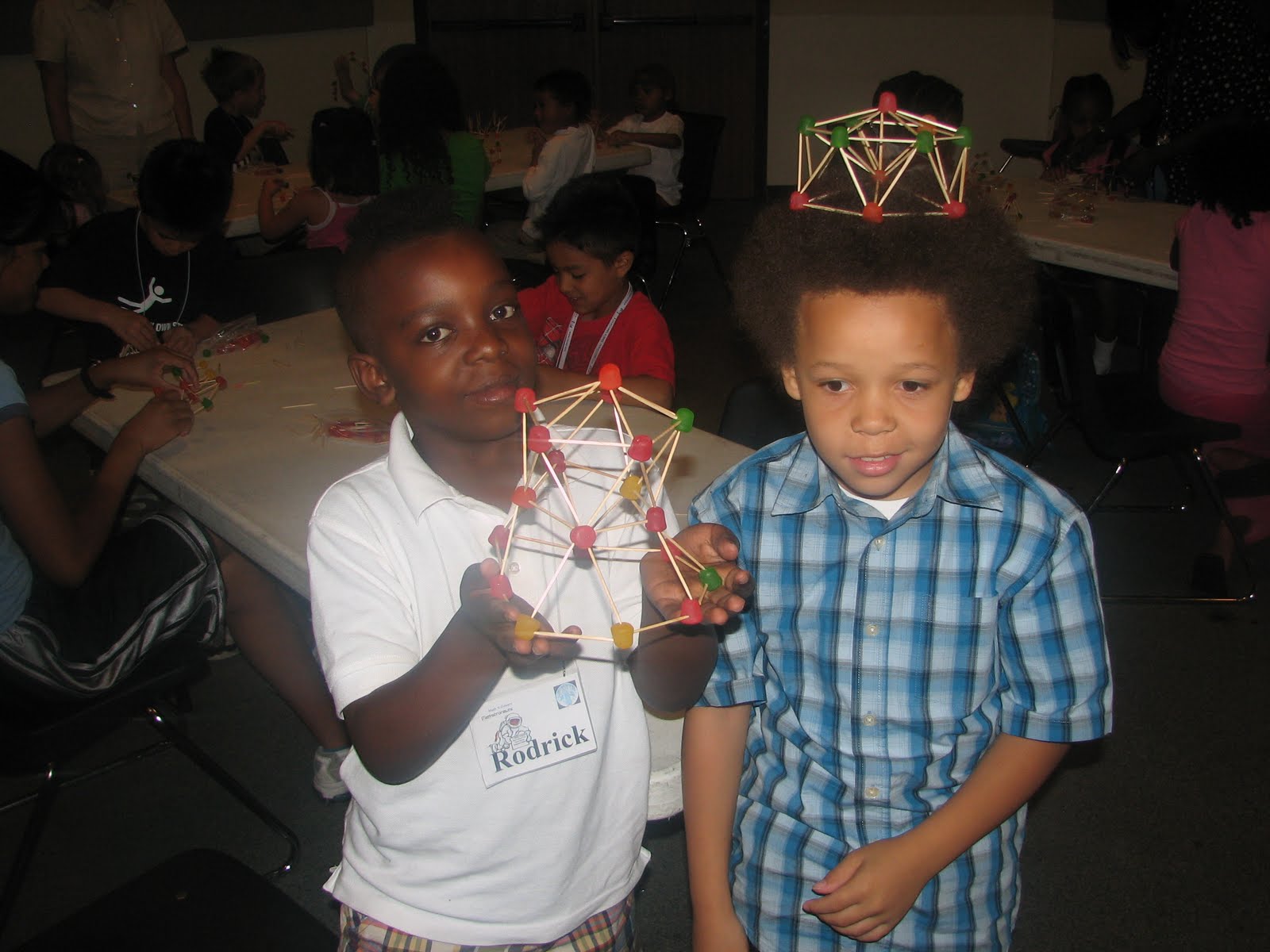
A taste of what we did last year!
Math Pioneers
Math Pioneers Mission Statement: *To instill a greater love and appreciation for the mathematical sciences *To eliminate the fear of mathematics *To increase the number of students majoring in the mathematical sciences *To help prepare students to meet the shortage of American engineers/mathematicians *To expose the disadvantaged to the joys of math/science *To overcome the spirit of mediocrity in the US
Thursday, January 19, 2012
Tuesday, May 17, 2011
Math Pioneers Math and Science Camps 2011
Grades K-12
Located at
Church in the City/Beth Abraham
16t h & Gaylord (near Colfax & Josephine)
Mathstronauts Camps
9:00 AM – 4:00 PM
Math Boot Camps
7:00 AM – 9:00AM
4:00 PM – 6:00PM
The greatest opportunities for math and science fun in all of Colorado.
$100 registration fee/family
Mathstronaut Camp - $150/week
Math Boot Camps - $25/week/camp
Partial scholarships available!
Call 303.349.3149 or email mathpioneers@gmail.com for more info and for registration forms.
June 6-10 - Examining Structures
Structures of earth, body, and man-made objects such as machines. (energy, electromagnetic spectrum - light & sound, biology, geology, archaeology, paleontology, cryptography)
June 13-17 - Robotics/City Building (robotics, electronics, combinatorics, biology, fractals, Golden Ratio, architecture, civil engineering, geometric art)
June 27-July 1 - Sky Watch/ Aviation (astronomy, meteorology; rocketry, geometry, trigonometry for kids, flight, space travel)
Located at
Church in the City/Beth Abraham
16t h & Gaylord (near Colfax & Josephine)
Mathstronauts Camps
9:00 AM – 4:00 PM
Math Boot Camps
7:00 AM – 9:00AM
4:00 PM – 6:00PM
The greatest opportunities for math and science fun in all of Colorado.
$100 registration fee/family
Mathstronaut Camp - $150/week
Math Boot Camps - $25/week/camp
Partial scholarships available!
Call 303.349.3149 or email mathpioneers@gmail.com for more info and for registration forms.
June 6-10 - Examining Structures
Structures of earth, body, and man-made objects such as machines. (energy, electromagnetic spectrum - light & sound, biology, geology, archaeology, paleontology, cryptography)
June 13-17 - Robotics/City Building (robotics, electronics, combinatorics, biology, fractals, Golden Ratio, architecture, civil engineering, geometric art)
June 27-July 1 - Sky Watch/ Aviation (astronomy, meteorology; rocketry, geometry, trigonometry for kids, flight, space travel)
Monday, May 17, 2010
Math and Science Camp - Summer 2010
Week 1 City Building & Geometric Art/Sculpture June 7-11
Students will learn about: architecture, civil engineering, and fractal geometry. They will study the physics behind structures as they construct bridges and design and build their own unique city structure. Meanwhile, they will learn about geometry, specifically polygons (especially trigons), polyhedra, graph theory (Lusona drawings), and fractal geometry and learn who fractal geometry plays a large part in African architecture.
Week 2 Rocket Science June 14 - 18
Students will contruct straw rockets, air pressure rockets, water bottle rockets, CO2 rockets, and Estes rockets this week. They will conduct experiments to see how varying fin shapes/sizes, pressure, and angles affect the flight of their rockets. Additionally, they will participate in the popular "Egg Drop," and older kids will build and launch hot air balloons. All kids will learn some level of geometry &/or trigonometry (depending upon level of ability) and their applications to rockets. Students will enjoy our guest, retired NASA rocket scientist , Dr. Layfield with COSROCS, who will help them launch their Estes Rockets.
Week 3 Examining Earth (Old & New) June 21-25
Students will explore geology and archaeology as they examine the most unique celestial body in our universe, our miraculous Earth. They will learn about rocks, volcanoes, stalactites, stalagmites, fossils, and geysers. They will also learn about the special history of math and astronomy of the Mayan culture by examining their astronomical tables, calendars, base 20 number etc.
Week 4 Robotics June 28 – July 2
Students will enjoy building and programming with robotics this week with the Rocky Mountain BEST group. They will also learn about electronics/electricity, basics about computer programming, base number system – particularly base 2, and combinatorics (permutations and combinations).
Week 5 Eye C U! July 5 – 9
Biology is the focus of this week! Students will study the human anatomy with models, cell extraction & observation, dissection, and dissection, and 3-D modeling of human anatomy. They will also learn much about insects, animal wildlife, and plants. They will see how mathematics, particularly the Golden Rectangle and fractal geometry can be seen in nature.
Week 6 Sky Watch July 12 – 17
This week focuses on astronomy and meteorology. They will model tornadoes with the tornado chamber, explore lightning and static electricity with the VanDerGraaf generator. They will enjoy participating in missions with the Challenger Center and traveling to see meteorologist and space meteorologists in action. They will also study the electromagnetic spectrum and how it relates to astronomy.
Week 7 Flight/Aviation July 19-23
The Science Man (Dr. Baynes, aviator & former science educator for NASA) returns to Denver for his Science Spectacular and RISE presentations and helps students learn about the principles of flight. Students will perform many hands-on activities including helping the Science Man create explosions galore as the he helps students understand physics and chemistry as it relate to aviation.
Week 8 Energy July 26-30
During this week, students will learn much about energy (renewable and non-renewable) and the electromagnetic spectrum. They will perform light labs, sound labs and many other activities as they explore renewable energy sources such as solar energy
TBD
Students will learn about: architecture, civil engineering, and fractal geometry. They will study the physics behind structures as they construct bridges and design and build their own unique city structure. Meanwhile, they will learn about geometry, specifically polygons (especially trigons), polyhedra, graph theory (Lusona drawings), and fractal geometry and learn who fractal geometry plays a large part in African architecture.
Week 2 Rocket Science June 14 - 18
Students will contruct straw rockets, air pressure rockets, water bottle rockets, CO2 rockets, and Estes rockets this week. They will conduct experiments to see how varying fin shapes/sizes, pressure, and angles affect the flight of their rockets. Additionally, they will participate in the popular "Egg Drop," and older kids will build and launch hot air balloons. All kids will learn some level of geometry &/or trigonometry (depending upon level of ability) and their applications to rockets. Students will enjoy our guest, retired NASA rocket scientist , Dr. Layfield with COSROCS, who will help them launch their Estes Rockets.
Week 3 Examining Earth (Old & New) June 21-25
Students will explore geology and archaeology as they examine the most unique celestial body in our universe, our miraculous Earth. They will learn about rocks, volcanoes, stalactites, stalagmites, fossils, and geysers. They will also learn about the special history of math and astronomy of the Mayan culture by examining their astronomical tables, calendars, base 20 number etc.
Week 4 Robotics June 28 – July 2
Students will enjoy building and programming with robotics this week with the Rocky Mountain BEST group. They will also learn about electronics/electricity, basics about computer programming, base number system – particularly base 2, and combinatorics (permutations and combinations).
Week 5 Eye C U! July 5 – 9
Biology is the focus of this week! Students will study the human anatomy with models, cell extraction & observation, dissection, and dissection, and 3-D modeling of human anatomy. They will also learn much about insects, animal wildlife, and plants. They will see how mathematics, particularly the Golden Rectangle and fractal geometry can be seen in nature.
Week 6 Sky Watch July 12 – 17
This week focuses on astronomy and meteorology. They will model tornadoes with the tornado chamber, explore lightning and static electricity with the VanDerGraaf generator. They will enjoy participating in missions with the Challenger Center and traveling to see meteorologist and space meteorologists in action. They will also study the electromagnetic spectrum and how it relates to astronomy.
Week 7 Flight/Aviation July 19-23
The Science Man (Dr. Baynes, aviator & former science educator for NASA) returns to Denver for his Science Spectacular and RISE presentations and helps students learn about the principles of flight. Students will perform many hands-on activities including helping the Science Man create explosions galore as the he helps students understand physics and chemistry as it relate to aviation.
Week 8 Energy July 26-30
During this week, students will learn much about energy (renewable and non-renewable) and the electromagnetic spectrum. They will perform light labs, sound labs and many other activities as they explore renewable energy sources such as solar energy
TBD
All weeks - Computer programming using Matlab software at UCD for 2 days a week whole summer?
Cost $125 registration fee per family per summer
$135/wk
Scholarships available. Email mathpioneers@gmail.com for registration form and/or scholarship application.
Parent Orientation May 21, 2010 at Stedman Elementary 6-8PM.
Sunday, May 9, 2010
2010 Math & Science Camp Coming Soon

During the summer of 2010, three major math and science camp providers - Colorado Association of Black Professional Engineers (CABPES), Math π-0-neers, and Shades of Blue- are joining forces to create the largest and most intense 8-week STEM camp for the Denver Metro Area. Afterwards, before school starts, they will host a math boot camp to better prepare Denver Metro Students for the upcoming school year. The 8-week camp will be held during the weeks of June 7 - July 31, 2010.
During the course of the 8 week camp, students will explore: robotics, physics, engineering, aviation, cryptography, geometry, trigonometry, meteorology, chemistry, biology, etc. Additionally, they will attend various field trips to places such as the Challenger Center of Colorado Springs (where they participate in space mission simulations), Air Force Academy, Wings over the Rockies, University of Colorado (where they will visit/use engineering/science labs), United Airlines Training Center(where they will use flight simulators), and National Oceanic and Atmospheric Administration (NOAA). They will also have special presentations/activities from Dr. Baynes - Science Man - from Interactive Science Programs who will put on a week-long "Science Spectacular" show, from Dr. Layfield, retired NASA rocket scientist and founder of Colorado Springs Rocket Society (COSROCS), who will help students build and launch Estes rockets, and more including probably an astronaut. The majority of the field trips (Challenger, Air Force Academy, Wings over the Rockies) and special presentations (Science Man, COSROCS, astronaut) will occur during the weeks of June 14-19, July 12 - 17, and July 19-24.
During the Math Boot camp, students will be given a pretest and then provided with the work corresponding to their weaknesses. They will work with educators, engineers, and scientists who will tutor them and help them develop the mathematical skills needed for the fall.
Labels:
Summer 2010
Thursday, March 19, 2009
2009 Summer Math and Science Camps
Math Pionneers
Presents
The 5th Annual
Math & Science Camps
The 5th Annual
Math & Science Camps
Denver
Located at Church in the City/Beth Abraham
16th & Gaylord (near Colfax & Josephine)
Located at Church in the City/Beth Abraham
16th & Gaylord (near Colfax & Josephine)
June 13 - July 31, 2009 (Levels K – 8th grade)**
9:00 AM – 4:00 PM
Hey Kids!
You can: create 3-D geometric art, create and crack secret codes, bend light, create
different colored flames, make a two-foot tornado, see a mini lightning bolt, create a
bridge out of spaghetti that can hold a sack of flour, make a large dome out of
gumdrops, race solar cars, save an egg in the “Egg Drop,” and more!
9:00 AM – 4:00 PM
Hey Kids!
You can: create 3-D geometric art, create and crack secret codes, bend light, create
different colored flames, make a two-foot tornado, see a mini lightning bolt, create a
bridge out of spaghetti that can hold a sack of flour, make a large dome out of
gumdrops, race solar cars, save an egg in the “Egg Drop,” and more!
Week 1: July 13 – July 17 Rockets & Flying Things
flight (lift, drag, etc.), rockets, parabolic motion, insects, basic trigonometry, etc.
Week 2: July 20 – July 24 City Builders
Engineering, gum drop domes, spaghetti bridges, trebuchets, electricity, structure of human body, etc.
Week 3: July 27 – July 31 Disaster Zone/Alien Life (Meteorology/Astronomy)
Modeling Tornadoes, volcanoes, & other disasters; water cycle; ocean life; finding life in the universe, light & sound labs, etc.
Schedule is subject to change.
** Levels K-8 (students are placed according to level, not age; preschoolers
capable of working on a Kindergarten level may also sign up)
Cost: $200/week. Scholarships available!
$20 registration fee.
Questions? Call Jenna Lin @ (303) 224 – 0584 or email mathpioneers@gmail.com.
Friday, February 20, 2009
Thursday, February 19, 2009
Low Expectations of Minorities in Schools
Edited version of article written by Jenna Lin for Cherry Creek Association for Gifted and Talented Foresight Newsletter (2004)
While politicians are busy debating over ‘adequate’ funding for the No Child Left Behind Act, we can focus on some key goals of the act that do not require funding. One goal of the No Child Left Behind Act that we all support is to ensure that minority children are not susceptible to what Bush calls “soft bigotry.” After observing that this was an issue in our own school district, Cherry Creek Schools has been working hard for the last few years towards eliminating this problem. The district began developing new GT identification procedures to make sure giftedness is being recognized in less affluent and/or in minorities. Additionally, the district invited Dr. Donna Ford, an expert in multicultural gifted education, to speak to our educators.
During this enlightening talk, she discussed how the lower expectations many teachers have of lower social-economic and minority students contribute to the fact that the giftedness of these often goes unnoticed and that these students are rarely given an adequate education. Her research confirmed the validity of the opinions that my family and I held due to our educational experiences. One example she gave showing how lowered expectations hurt students was as follows:
Dr .Ford visited a school district that, like Cherry Creek, contained schools in a diverse social-economic neighborhoods. She decided to visit an elementary school in the most affluent and least diverse part of the district and an elementary school in the least affluent and most diverse [more blacks] of the school district. She visited a fourth or fifth grade class in each school both of which had a focus on ‘geometry/angles’ that day. In the less affluent school, the teacher taught the children what an angle was. He drew an angle on the board and explained to the students that the figure was an angle and then taught the students what an acute angle was and what a right angle was. He explained to them that an acute angle was an angle with a measure less than 90 degrees, while a right angle was an angle with a measure of 90 degrees. A student raised her hand and asked if angles were measured with rulers. While a chalk board protractor was on a nail over the teacher’s head in the front of the room, the teacher told the student that she would learn about how to measure the angles the following year. The students were then given an assignment to find acute and right angles in the classroom and a written assignment.
In the more affluent classroom [same grade and same district] the teacher passed out protractors to each student. He also taught the students what acute and right angles were and also taught them about obtuse and straight angles. He explained that obtuse angles had measures greater than 90 degrees and less than 180 degrees. He then proceeded to explain to the students how to measure angles using their protractors. The students too had to go around the classroom and find angles.
Dr. Donna Ford asked the audience to contemplate and decide who would have a better command of what angles were and would be able to handle answering questions about angles. She then informed the audience that she had looked at the state requirements and what was to tested on that year’s state exam and discovered that the standards required students in that grade level to know what the definition of an acute, a right, a obtuse, and a straight angle. She also stated the obvious when she said that the students in the first classroom could not do as well as the students in the second classroom with the lesson taught to them by the teacher alone even if they each knew everything the teacher taught them She also made note that the teacher did not take advantage of the opportunity to expand on his lesson when the student asked him about how angles were measured.
Dr. Ford talked to the teacher in the first classroom and asked him a few questions. She asked him if he would handle the class differently if he ever got an opportunity to teach at the more affluent school. He told her he would have. She asked him how and he described what he would do and guess what? What he described was more like what the teacher in that school did. I believe she talked to him further and pointed out his different expectations and encouraged him to treat the students equally.
This is an important idea. I would never assume that that teacher had ill intentions or complete disregard for his students. However, his unchecked opinion clouded his judgement. So, while the politicians debate, we educators can spend more time checking our opinions and make sure we are truly treating our students fairly. Not everything can be exactly the same nor equal. Teachers do have to tailor their classrooms to the students. However, they should not compromise the curriculum in the process. Additionally, many teachers would be surprised to find out that minorities and low-income students can learn in the same ways richer/white kids learn. They do not have to tailor their teaching that much. They do not need to “rap” or use any other what Dr. Ford calls superficial methods of trying to diversify the curriculum. For example, in a math class, a teacher can merely include accomplishments of black mathematicians/scientists of the past and particularly of the present if they want to diversify the curriculum. Otherwise, teach as if you were in the more affluent school.
While politicians are busy debating over ‘adequate’ funding for the No Child Left Behind Act, we can focus on some key goals of the act that do not require funding. One goal of the No Child Left Behind Act that we all support is to ensure that minority children are not susceptible to what Bush calls “soft bigotry.” After observing that this was an issue in our own school district, Cherry Creek Schools has been working hard for the last few years towards eliminating this problem. The district began developing new GT identification procedures to make sure giftedness is being recognized in less affluent and/or in minorities. Additionally, the district invited Dr. Donna Ford, an expert in multicultural gifted education, to speak to our educators.
During this enlightening talk, she discussed how the lower expectations many teachers have of lower social-economic and minority students contribute to the fact that the giftedness of these often goes unnoticed and that these students are rarely given an adequate education. Her research confirmed the validity of the opinions that my family and I held due to our educational experiences. One example she gave showing how lowered expectations hurt students was as follows:
Dr .Ford visited a school district that, like Cherry Creek, contained schools in a diverse social-economic neighborhoods. She decided to visit an elementary school in the most affluent and least diverse part of the district and an elementary school in the least affluent and most diverse [more blacks] of the school district. She visited a fourth or fifth grade class in each school both of which had a focus on ‘geometry/angles’ that day. In the less affluent school, the teacher taught the children what an angle was. He drew an angle on the board and explained to the students that the figure was an angle and then taught the students what an acute angle was and what a right angle was. He explained to them that an acute angle was an angle with a measure less than 90 degrees, while a right angle was an angle with a measure of 90 degrees. A student raised her hand and asked if angles were measured with rulers. While a chalk board protractor was on a nail over the teacher’s head in the front of the room, the teacher told the student that she would learn about how to measure the angles the following year. The students were then given an assignment to find acute and right angles in the classroom and a written assignment.
In the more affluent classroom [same grade and same district] the teacher passed out protractors to each student. He also taught the students what acute and right angles were and also taught them about obtuse and straight angles. He explained that obtuse angles had measures greater than 90 degrees and less than 180 degrees. He then proceeded to explain to the students how to measure angles using their protractors. The students too had to go around the classroom and find angles.
Dr. Donna Ford asked the audience to contemplate and decide who would have a better command of what angles were and would be able to handle answering questions about angles. She then informed the audience that she had looked at the state requirements and what was to tested on that year’s state exam and discovered that the standards required students in that grade level to know what the definition of an acute, a right, a obtuse, and a straight angle. She also stated the obvious when she said that the students in the first classroom could not do as well as the students in the second classroom with the lesson taught to them by the teacher alone even if they each knew everything the teacher taught them She also made note that the teacher did not take advantage of the opportunity to expand on his lesson when the student asked him about how angles were measured.
Dr. Ford talked to the teacher in the first classroom and asked him a few questions. She asked him if he would handle the class differently if he ever got an opportunity to teach at the more affluent school. He told her he would have. She asked him how and he described what he would do and guess what? What he described was more like what the teacher in that school did. I believe she talked to him further and pointed out his different expectations and encouraged him to treat the students equally.
This is an important idea. I would never assume that that teacher had ill intentions or complete disregard for his students. However, his unchecked opinion clouded his judgement. So, while the politicians debate, we educators can spend more time checking our opinions and make sure we are truly treating our students fairly. Not everything can be exactly the same nor equal. Teachers do have to tailor their classrooms to the students. However, they should not compromise the curriculum in the process. Additionally, many teachers would be surprised to find out that minorities and low-income students can learn in the same ways richer/white kids learn. They do not have to tailor their teaching that much. They do not need to “rap” or use any other what Dr. Ford calls superficial methods of trying to diversify the curriculum. For example, in a math class, a teacher can merely include accomplishments of black mathematicians/scientists of the past and particularly of the present if they want to diversify the curriculum. Otherwise, teach as if you were in the more affluent school.
Monday, February 16, 2009
Subscribe to:
Posts (Atom)